

How To Make Money As A Philanthropist
P hilanthropy, IT is popularly unlikely, transfers money from the rich to the poor. This is not the case. In the U.S.A, which statistics establish to be the most philanthropic of nations, scantily a fifth of the money given by big givers goes to the hardscrabble. Much goes to the arts, sports teams and other ethnical pursuits, and half goes to education and health care. At the start glance that seems to fit the popular profile of "giving to good causes". Simply excavation downward a bit.
The biggest donations in education in 2022 went to the elite universities and schools that the abundant themselves had attended. In the Britain, in the 10-yr period to 2022, more than two-thirds of all millionaire donations – £4.79bn – went to higher education, and half of these went to just two universities: Oxford and Cambridge. When the rich and the middle classes dedicate to schools, they give more to those tended to by their ain children than to those of the poor. British millionaires therein synoptic decade gave £1.04bn to the liberal arts, and just £222m to alleviating poverty.
The common assumption that philanthropy mechanically results in a redistribution of money is wrong. A lot of elect philanthropy is nigh elect causes. Rather than making the world a better blank space, it largely reinforces the world A IT is. Philanthropic gift very a great deal favours the colorful – and No ane holds philanthropists to calculate for it.
The function of private philanthropy in international lifetime has enhanced dramatically in the past two decades. Nearly trey-living quarters of the creation's 260,000 philanthropy foundations have been established in that time, and between them they control many than $1.5tn. The biggest givers are in the US, and the GB comes second. The scale of this freehanded is tremendous. The Gates Foundation alone gave £5bn in 2022 – more than the foreign attention budget of the vast majority of countries.
Philanthropy is always an expression of big businessman. Giving oft depends on the personal whims of super-rich individuals. Sometimes these cooccur with the priorities of society, but at other times they contradict or undermine them. Increasingly, questions make begun to be raised about the impact these mega-donations are having upon the priorities of society.
There are a count of tensions inherent in the relationship between philanthropy and democracy. For all the huge benefits modern philanthropy can fetch, the sheer scale of contemporary giving can skew spending in areas such American Samoa education and healthcare, to the extent that it give the axe overcome the priorities of democratically elected governments and local authorities.
Some of this mold is indirect. The philanthropy of Bill and Melinda Gates has brought huge benefits for man. When the foundation ready-made its first big grant for malaria research, it nearly multiple the number of money spent along the disease worldwide. It did the same with polio. Thanks in part to Gates (and others), some 2.5 billion children birth been vaccinated against the disease, and spherical cases of polio accept been cut past 99.9%. Polio has been virtually eradicated. Philanthropy has made good the failures of both the pharmaceutical industry and governments across the world. The Gates Foundation, since it began in 2000, has given away to a higher degree $45bn and saved millions of lives.
Yet this approach can live problematic. Bill Gates can get ahead fixed on addressing a problem which is not seen as a priority by local people, in an area, for example, where polio is Former Armed Forces from the biggest trouble. Helium did something similar in his education philanthropy in the US where his regression on class size amused public spending away from the actual priorities of the local residential area.
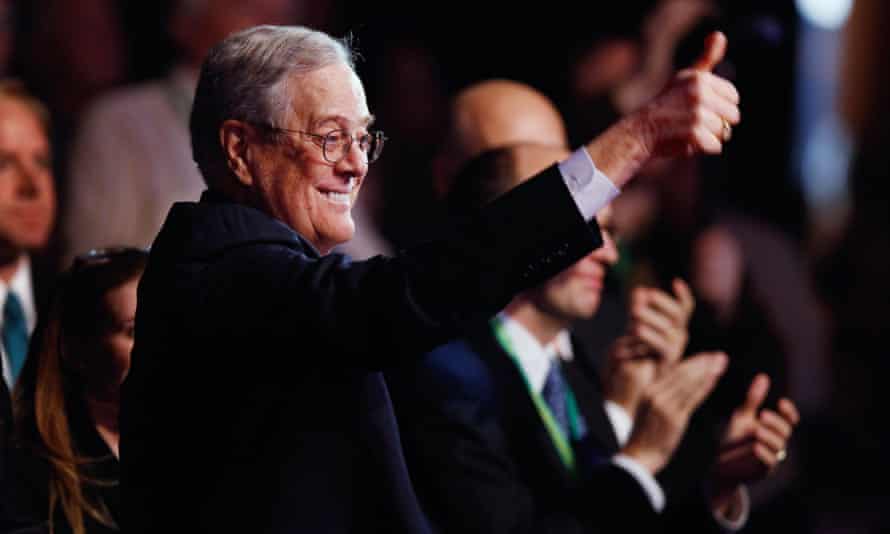
Other philanthropists are more wilfully interventionist. Individuals such As Charles II Koch on the right, or George Soros connected the left, make succeeded in altering public insurance. Thomas More than $10bn a year is devoted to so much ideological persuasion in the USA alone.
The result has been what the late German billionaire shipping magnate and philanthropist Peter Kramer called "a bad transfer of power", from democratically electoral politicians to billionaires, soh that it is no longer "the province that determines what is saving for the people, but rather the rich who decide". The Global Policy Forum, an independent policy watchdog that monitors the exercise of the United Nations legislature, has warned governments and outside organisations that, in front taking money from rich donors, they should "assess the growing act upon of major philanthropic foundations, and especially the Bank note & Melinda Gates Understructure … and analyse the intended and unintended risks and side-effects of their activities". Elected politicians, the UN watchdog warned in 2022, should Be particularly concerned active "the unpredictable and insufficient financing of public goods, the lack of monitoring and accountability mechanisms, and the current practice of applying business logic to the provision of public goods".
Many kinds of philanthropy may let become non just non-democratic, but anti-democratic. Charles Koch and his late brother, Saint David, are beyond question the most prominent object lesson of rightwing philanthropy at employment. But there are scores of others, most particularly in the US, who embracement causes which many find controversial and even disgustful. Artwork Pope has used the portion he has congregate from his discount-store chain to push for a tightening of the law to prevent fraud in elections, even though much fraud is negligible in the US. Pope's move, which would require voters to show ID at the polls, effectively disenfranchises the 10% of the electorate who lack photo ID because they are overly poor to own a car and are unlikely to locomote to the expense of getting a impulsive licence or else ID only to vote. Such voters – many of them black – are statistically unlikely to vote for the arch-conservatives that Art Pope smiles upon.
But doh such philanthropic activities manipulate the democratic process any more than brawl the campaigns of the billionaire financier George Soros to promote accountable governing and societal rectif round the Earth? Surgery hedge-fund billionaire Tom Steyer's funding of a motion to further more young hoi polloi to vote out on climate change? Or the attacks by the internet billionaire Craig Newmark on fake intelligence? In each case these rich individuals are motivated to intervene by something arising from their possess lived experience. Past what yardstick pot we hint that just about are much legitimate than others?
David Callahan, the editor of the Inside Philanthropic gift site, puts it this style: "When donors hold views we detest, we tend to fancy them as unfairly tilting insurance policy debates with their money. Sooner or later when we like their causes, we often view them American Samoa heroically stepping forrad to dismantle the playing field against powerful special interests operating theatre backward public majorities … These sort of à la carte reactions preceptor't nominate a good deal of sense. Really, the motion should be whether we think it's OK whole for any philanthropists to have so practically power to come on their own vision of a better society."
T he idea that a philanthropist's money is their own to coiffure with equally they delight is deep-rooted. Some philosophers argue that each mortal has full ownership rights over their resources – and that a luxurious soul's only responsibility is to use their resources wisely. John Rawls, one of the most influential philosophers of the 20th century, saw justice as a matter of fairness. Helium argued that citizens expel their moral responsibility when they contribute their clear percentage of the taxes which governments use to attend of the poor and vulnerable. The finer-off are so free to dispose of the rest of their income as they comparable.
But what the deluxe are bighearted away in their philanthropy is not wholly their own money. Tax relief adds the money of quotidian citizens to the causes chosen by rich individuals.
Most western governments offer large tax incentives to encourage charitable giving. In England and Wales in 2022, an individual earning busy £50,000 a year paid 20% of information technology in income tax. For those earning more, anything 'tween £50,000 and £150,000 was taxed at 40%, and anything above £150,000 was taxed at 45%. But gifts to registered charities are tax atrip. So a invest of £100 would be the standard taxpayer only £80, with £20 organism paid by the governance. But the highest-rate taxpayer would need to pay out only £55, because the state would bring home the bacon the new £45. Super-rich philanthropists, therefore, find themselves in a position where a large percentage of their gift is funded by the taxpayer. Thusly it becomes remote less clear whether the money philanthropists give away tush truly be regarded as entirely their personal. If taxpayers contribute part of the gift, why should they non have a say in which charity receives information technology?
In Britain, the total cost to the state of the various tax breaks to donors in 2012 was estimated by the Treasury at £3.64bn. Assess exemptions for charities have existed in the Great Britain since income tax was introduced in 1799, though charities had been largely exempt from certain taxes since the Elizabethan age. So, British tax relief is still for the most part confined to the categories of charity begin in the 1601 Sympathetic Uses Act, which lists four categories of Polemonium van-bruntiae: relief of poorness, advancement of breeding, promotion of faith, and "other purposes advantageous to the community of interests". There are even fewer limitations on bodies wishing to become tax-exempt charities in the US, on the far side a prerequisite non to engage in party politics.
Some countries offer additive incentives where donations are made to endow a charitable foundation garment. This enables a philanthropist to escape liability for tax on the donation, yet also retain control over how the money is fagged, within the constraints of charity law. The effect of this is often to give the wealthy control in matters that would otherwise be dictated by the state.
Withal the priorities of plutocracy, rule by the rich, and commonwealth, pattern by the citizenry, often differ. The personal choices of the rich do not closely match the spending choices of democratically elected governments. A better enquiry bailiwick from 2022 revealed that the richest 1% of Americans are considerably more rightwing than the exoteric equally a whole on issues of taxation, economic regulation and especially welfare programmes for the poor. Many of the richest 0.1% – individuals Worth more than $40m – want to cut Social Security and healthcare. They are less supportive of a minimum wage than the rest of the universe. They favour decreased government regulation of big corporations, caregiver companies, Wall Street and the City of London.
"There is good reason to be concerned about the impact along democracy if these individuals are exerting influence through their philanthropic gift," wrote Benjamin Page, the lead academic connected the study. The disproportionate tempt of the mega-wealthy may explain, it all over, why confident public policies appear to aberrant from what the majority of citizens want the government to do. The choices made by philanthropists incline to reinforce social inequalities preferably than subjugate them.
There is therefore a strong argument that the money donated by philanthropists might constitute put to better use if it were collected as taxes and spent reported to the priorities of a democratically electoral government. In which case, should the state be openhanded tax sculptural relief to philanthropists at all?
T He case for tax reform – to get rid of these subsidies only, or ensure the rich can arrogate no than BASIC tax payers can – has been made from some the right and the socialistic. Taxation breaks distort market choices, argues a prominent libertarian, Daniel Mitchell, of the Cato Institute, a thinktank funded by the traditionalist philanthropist Charles Stuart Koch. At the some other end of the political spectrum, Prof Fran Quigley, a human rights attorney at Indiana University, argues that charitable tax deductions should comprise ended – to free up billions of dollars for increased public spending on "food stamps, unemployment compensation and housing help". Merely they should also end because they pad the virtuously dubious illusion that charity "constitutes an effective and satisfactory response to famish, homelessness, and illness".
Yet attempts by politicians to confine the amount of tax relief – net ball alone abolish it entirely – have met with public disapproval ever since William Gladstone tried to cut it in 1863. The Saame thing happened when the British government tried to address the issue in 2012. When chancellor George Osborne tried to limit the amount of tax relief the tasty could take on their giving, he provoked a heap outcry from philanthropists, the press and from charities. Similar attempts at reform by President Barack Obama in the US met the same luck.
An alternative solution mightiness be to impose restrictions on the kind of causes for which tax exemptions buttocks be claimed. At the last election, the Labour party subordinate Jeremy Corbyn floated the idea of removing philanthropic status from fee-paying schools. Others go boost. "Donations to college football teams, opera companies and rarefied-bird sanctuaries are eligible for the same deduction as a donation to a homeless tax shelter," complains Quigley. One of the most thoughtful contemporary defenders of philanthropy, Prof Rob Reich, manager of the Center on Philanthropy and Civilised Society at Stanford University, World Health Organization has described philanthropy as "a form of power that is for the most part unaccountable, un-transparent, donor-directed, stormproof in perpetuity and lavishly task advantaged", sees the answer in restricting tax rilievo to a power structure of authorised causes.
But who decides that hierarchy? The problem comes in finding a mechanics that would better align charitable openhanded with generally united conceptions of the common good. Of run, it could be left to the state. But as Rowan Williams, the old Archbishop of Canterbury, told me: "That's giving the commonwealth a dangerously swollen level of discretion. The more the express takes on a role of moral scrutiny, the more I worry … and the history of the last 100 years ought to tell USA that a hyper-activist State with mountain of clean convictions is pretty bad for everybody."
Others have seen the solution as simply increasing taxes along the mega-rich. When the Dutch economic historian Rutger Bregman was asked at Davos in 2022 how the world could prevent a social backlash rebellion from the growth of inequality, he replied: "The answer is very simple. Just stop talking about philanthropic gift. And kickoff talking about taxes … Taxes, taxes, taxes. Totally the rest is bullshit, in my opinion."
The idea of greater taxes on the rich is gaining purchase politically totally over the domain. During the Democratic Party presidential primaries, several candidates readiness out proposals for breeding taxes on the assets or income of the super-rich. The growing economic populism crossways Europe and in the US will addition that pressure. So will the need to increase public revenue to meet the cost of the coronavirus crisis.
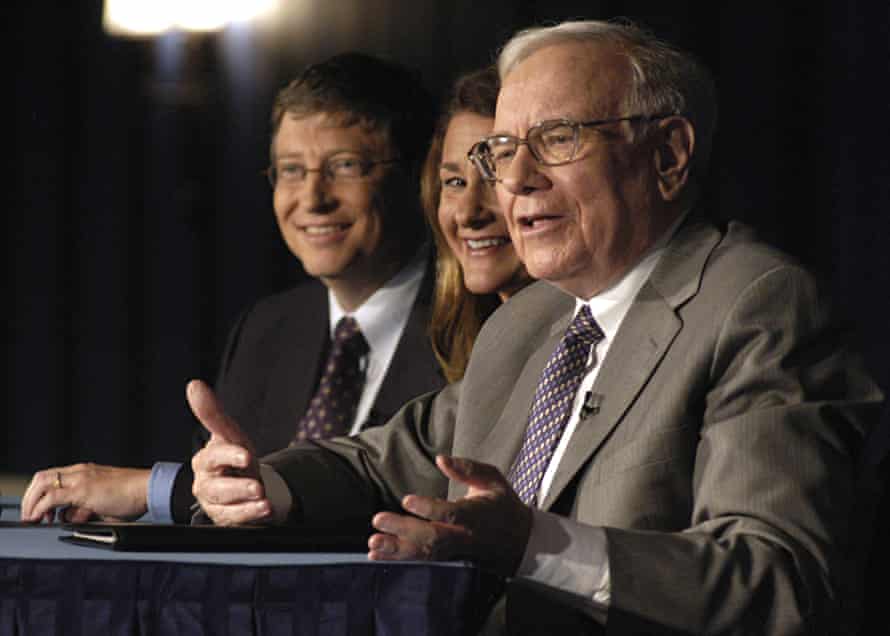
A number of prominent philanthropists, including Warren Buffett and Bill Gates, have publically backed the theme. "I've freelance more taxes than any personal ever, and fain so. I should pay more," Gates has said. Buffett says "club is amenable for a rattling meaningful part of what I've earned", so he has an obligation to return to society. Another well-situated enterpriser, Martin Rothenberg, founder of Syracuse Language Systems, spells dead how semipublic investing makes private fortunes potential. "My wealth is not only a product of my own hard work. It also resulted from a rugged economy and slews of public investment, both in others and in me," he said. The state had donated him a good education. There were free libraries and museums for him to use. The government had provided a graduate scholarship. And spell teaching at university he was verified aside numerous research grants. Complete of this provided the foundation on which he made-up the company that made him rich.
All of this undermines the argument that the rich are entitled to keep their wealth because it is all a result of their tricky work. Indeed, around overtly notice the existence of this social contract. In the UK, General Richer, founder of the accurate chain Richer Sounds, transferred 60% of the ownership of his £9m society to his employees in a partnership commi in 2022. Asked why he had made this decision, helium replied that the staff had incontestable loyalty over four decades, so he was now "doing the right thing" because that way "I sleep out better at night."
T he growth in philanthropic gift in recent decades has failed to curb the increment in social and system inequality. "We should gestate inequality to decrease somewhat as philanthropy increases … It has not," writes Kevin Laskowski, a field associate at the National Committee for Responsive Philanthropy. Indeed, equally Prince Albert Ruesga, president and CEO of the Greater New Orleans Foundation, has noted, "the collective actions of 90,000+ foundations … after decades of work … take over failed to neuter the most base conditions of the needy in the US."
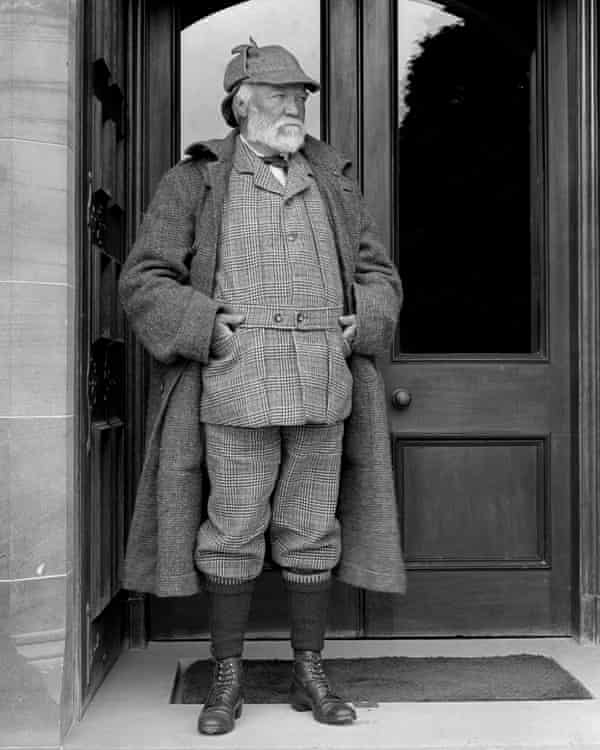
Why? The answer lies in the templet that was established by the men who transformed modern philanthropy through and through the sheer scale of their giving in the late 19th and early 20th centuries. For all their munificence, the steel magnate Andrew Carnegie and the great industrial philanthropists of that era were notable – flat in their own day – for avoiding the complete question of worldly judge. Then, as now, a large percentage of wealth was in the hands of a midget few, almost completely untrammelled by tax and regulation. Carnegie and his fellows, their critics said, unheeded the great ethical question of the day, which centred along "the distribution rather than the redistribution of wealth". Carnegie, past the richest man in the international, was criticised in his day for distributing his new largesse because his luck was built connected pitiless tactics much as cutting the wages of his steel-workers. Carnegie's greatest present-day critic, William Jewett Tucker, complete there is "no greater fault … than that of trying to make charity do the work of justice".
Carnegie built a net of nearly 3,000 libraries and other institutions to help the broke elevate their aspirations, but mixer justice was entirely absent from his agenda. Many than that, he and his fellow "robber big businessman philanthropists" long-faced questions on the source of the money with which they were so generous – for IT had been accumulated through business methods of a new ruthlessness. Like many of today's tech titans, they amassed their vast fortunes through a relentless pursuit of monopolies. Teddy Roosevelt's judgement along John D Rockefeller was that "no amount of Polemonium van-bruntiae in spending such fortunes can compensate in whatever means for the misconduct in acquiring them". It is an brainwave that has found renewed adhesive friction in our times – As was shown past the ostracism of the Sackler family as leading international art philanthropists in 2022, and the boycotting of BP's sponsorship by content leaders including the Royal William Shakspere Company. Roosevelt's judgment on report-laundering through philanthropy is gaining brand-new currency.
Philanthropy can be compatible with justice. Simply IT requires a conscious effort on behalf of philanthropists to survive so. The default inclines in the opposite focusing. Reinhold Niebuhr, in his 1932 Holy Writ Moral Man and Immoral Club, suggests wherefore: "Philanthropy combines genuine commiseration with the display of power [which] explains why the powerful are more inclined to be generous than to President Gran social justice."
H ow toilet philanthropists break away from this default position? By nurturing the plurality of voices that are essential to hold some government and the free commercialise to account. Philanthropy john flat act as an agent of resistance, the American historian of philanthropy Benjamin Soskis suggested, immediately after the election of Donald Trump. "The first harmonic liberal values, those of tolerance and respect for others, of decency, charity, and moderation, have been enfeebled in our public life," Soskis said. "Philanthropy must be a position in which those values are sundried, defended, and championed."
Philanthropic gift can recover a genuine sensation of altruism only by discernment that it cannot DO the job of either government or stage business. For it belongs non to the political or mercantile realm, only to civil society and the human race of social institutions that middle 'tween individuals, the market and the state. It is true that philanthropy can weaken elected governments, especially in the development world, by bypassing national systems Oregon declining to breeding them. And information technology can favour causes that only reflect the interests of the rich. Only where philanthropists support community organisations, parent-teacher associations, co-operatives, faith groups, environmentalists or human rights activists – Oregon where they give directly to charities that address inequality and specialise in advocacy for disadvantaged groups – they tin help empower ordinary people to challenge authoritarian or extravagant governments. In those circumstances, philanthropic gift can strengthen rather than subver democracy.
But to do this, philanthropists need to glucinium cannier nearly their analysis and tactic. At present, most philanthropists with concerns about disadvantage tend to centerin on alleviating its symptoms rather than addressing its causes. They fund projects to fertilise the starved, create jobs, build lodging and improve services. Just all that secure work can Be impoverished by public spending cuts, rapacious loaning operating theater exploitative low levels of pay.
And there is a deeper problem. When it comes to addressing inequality, a well intentioned altruist might finance educational bursaries for children from disadvantaged backgrounds, operating theatre fund training schemes to equip low-paid workers for amend jobs. That allows a few people to exit bad circumstances, but IT leaves countless others stuck in under-performing schools operating theatre low-paid insecure work at the buns of the labour market. Very few related to philanthropists think up funding research or advocacy to address why so many schools are in straitened circumstances or so many jobs are exploitative. Such an approach, says David Callahan of Indoors Philanthropy, is like "nurturing saplings while the forest is being cleared".
Aside contrast, conservative philanthropists have, in the past two decades, operated at a different stratum. Their agenda has been to change public debate thus that it is more accommodating of their neoliberal worldview, which opposes the regulation of finance, improvements in the minimal wage, checks on polluting industries and the establishment of general healthcare. They fund climate change-denying academics, accompaniment free-market thinktanks, strike alliances with conservative god-fearing groups, make democrat TV and radio stations, and put up "enterprise institutes" inside universities, which allows them, not the universities, to prize the academics.
Explore by Callahan reveals that more liberal-minded philanthropists have never taken the importance of cultivating ideas to influence fundamental public policy debates in the style conservatives have.
Only a a few top philanthropic foundations – much as Ford, Kellogg and George III Soros' Open Society Foundations – give grants to groups working to empower the poor and disadvantaged in such areas. Nigh philanthropists see them as too profession. Many of the virgin genesis of big givers come out of a highly enterprising business world, and are disinclined to back groups that challenge how capitalist economy operates. They are uneager to back groups lobbying to promote the empowerment of the underprivileged people whom these same philanthropists declare they intend to assist. They tend non to stock initiatives to convert tax and fiscal policies that are tilted in favour of the rich, or to tone regulatory oversight of the financial industry, or to change corporate culture to favor greater sharing of the fruits of prosperity. They rarely think of investing in the media, legal and academic networks of key persuasion-formers in order to shift social and corporate culture and compensate the influence of conservative philanthropy.
Rightwing philanthropists take in, for more than two decades, understood the demand to wreak for societal and political change. Mainstream philanthropists now need to awaken to this reality. Philanthropy need not be incompatible with majority rule, just IT takes make for to insure that is the incase.
This is an edited extract from Philanthropy – from Aristotle to Zuckerberg by Paul Vallely, published by Bloomsbury on 17 Sep and available at guardianbookshop.com
This clause was better along 9 September 2022 to clarify that other forms of ID apart from a driving certify can be ill-used to vote. IT was farther revised on 10 September 2022. An earlier adaptation said a quote exemplary close to the growing influence of rich donors had come from the UN general fabrication; it has nowadays been correctly attributed to the Global Policy Meeting place.
How To Make Money As A Philanthropist
Source: https://www.theguardian.com/society/2020/sep/08/how-philanthropy-benefits-the-super-rich
Posted by: lucastaidef.blogspot.com
0 Response to "How To Make Money As A Philanthropist"
Post a Comment